
Search Lee County Arrest and Booking Records
Lee County is in the central part of North Carolina with Sanford as the county seat. The county sits at the crossroads of several major highways. The Sheriff's Office manages arrests and jail operations. The Clerk of Court maintains criminal case files at the courthouse. Both offices provide public access to records under state law. Online tools offer additional search paths. This guide explains how to find Lee County arrest records through local offices and state resources.
Lee County Sheriff Arrest Records
The Lee County Sheriff's Office is at 1703 Tramway Rd in Sanford, NC 27332. The phone number is (919) 718-4560. Deputies handle patrol, investigations, and warrant service across the county. Every arrest produces a booking record with the person's name, charge, date, and bond amount.
Walk-in requests are accepted at the office. Staff search by name or booking number. Phone requests work for basic information. The Sheriff's Office also handles civil process and courthouse security. Arrest records from the office cover both felony and misdemeanor cases throughout Lee County.
The Sheriff coordinates with Sanford police on cases that overlap jurisdictions. Records from those joint operations may be held by either agency. If you cannot find a record at the Sheriff's Office, check with Sanford PD as well. The Sheriff's records cover all bookings processed at the county jail regardless of the arresting agency.
The image below shows the NC Courts page for Lee County with courthouse details.
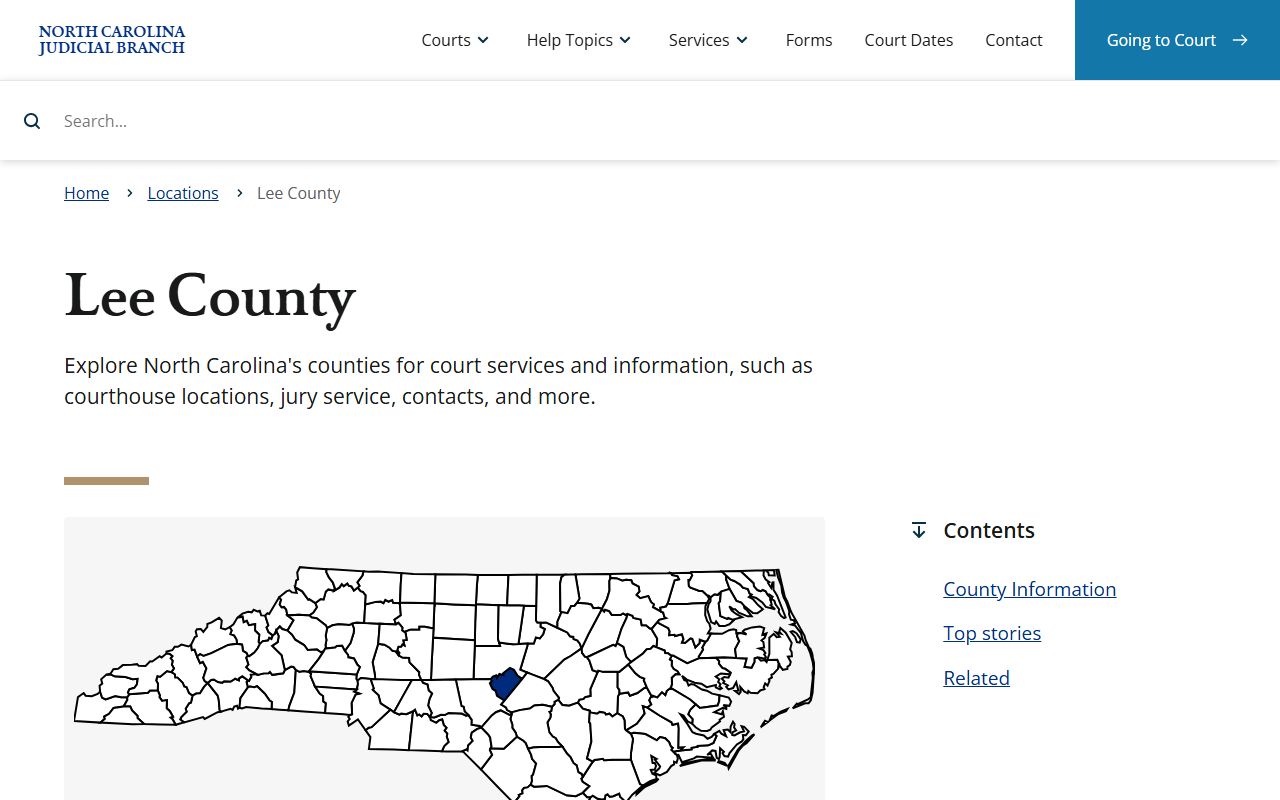
This page provides the courthouse address and contact numbers for Lee County.
Lee County Jail and Detention Records
The Lee County Jail is operated by the Sheriff's Office. It holds people awaiting trial and those serving short sentences. Booking records are created for every person brought into the facility. These files include the arrest date, charges, mugshot, and bond details.
You can call the jail for current inmate information. Staff can confirm whether someone is in custody. Booking logs are public records under N.C.G.S. 132-1.4. The jail also tracks release dates and court appearance schedules. This information is available on request.
Families often contact the jail to check on a person's status. The staff can provide basic booking data by phone. For more detailed records, an in-person visit to the Sheriff's Office may be needed. The jail processes bookings around the clock. New arrest records are created as soon as someone is booked into the facility.
Bond amounts are set by a magistrate at the time of booking. The bond schedule depends on the severity of the charges. You can check bond information by calling the jail or visiting in person. Bond records are part of the public booking file.
Lee County Court Records and Criminal Cases
The Lee County Clerk of Superior Court is at 1400 S Horner Blvd in Sanford. The Clerk maintains all criminal case files. Court records cover the full case timeline from charge to final disposition. They include plea details, hearing dates, and sentencing outcomes.
Online court records may be available through NC Court Access. This portal allows name-based searches for case information. Not all records are online. For complete files, visit the courthouse in person. Bring a photo ID and the person's full name. Staff can search the system while you wait.
Court records are more detailed than booking logs. They show the full legal process. A booking log tells you about the arrest. A court record tells you about the trial, plea, or dismissal. Both types of records are public in Lee County under state law.
Below is a screenshot of the Lee County court records access page.
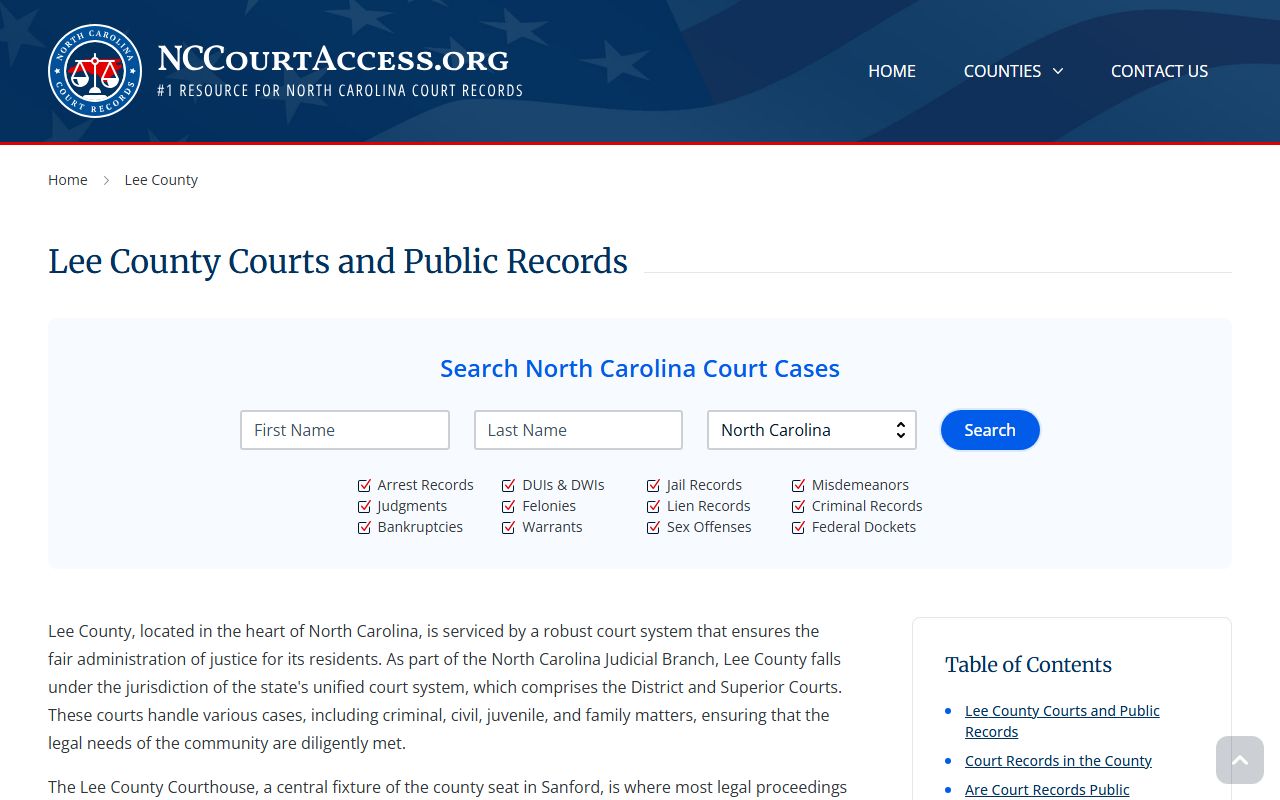
This resource can help you find criminal case data for Lee County online.
North Carolina Statewide Arrest Record Tools
The NC State Bureau of Investigation offers background checks that cover all counties. SBI checks require a fee. They are the most thorough option for statewide arrest history. Results include charges, dispositions, and dates from across North Carolina. Most SBI checks also require fingerprints for positive identification.
The NC DPS offender search is free. It shows people under state supervision. This includes probation, parole, and incarceration. The tool lists conviction details and current status. It supplements local records for Lee County arrest searches and covers the entire state.
Under N.C.G.S. Chapter 132, public records are open to any person. Arrest records fall under this rule. However, certain records are restricted by N.C.G.S. 132-1.4, which covers active investigations and sealed files. The NC Courts website has more details on how background checks work through the court system.
Lee County Arrest Record Procedures
After an arrest, deputies file a booking report at the jail. This report enters the county system. The courts receive it once charges are formally filed. Both the Sheriff and Clerk maintain separate but overlapping records. The Sheriff's records focus on the arrest itself. Court records track the legal case that follows.
Expunged records are removed from public databases. Juvenile cases are sealed. Dismissed cases stay in the system unless expungement is granted. Per N.C.G.S. 132-1.4, law enforcement may withhold records tied to open investigations. Once a case closes, most records become fully public and available for review.
The booking process in Lee County follows standard state procedures. Fingerprints and photos are taken. Personal information is recorded. The charges are listed. Bond is set by a magistrate. All of this becomes part of the arrest record. These steps are the same for every person booked into the Lee County Jail.
Tips for Finding Lee County Arrest Records
Start with the Sheriff's Office for recent bookings. Call (919) 718-4560. For court case details, contact the Clerk of Court. Online tools like NC Court Access and DPS offender search are good starting points. SBI background checks provide the broadest coverage for statewide searches.
In-person visits offer the most access. Staff can search internal databases. Bring the person's full name and date of birth. Written requests by mail work too. Include as much detail as possible. Response times depend on staff workload and the complexity of the request.
Lee County's moderate size means most records are manageable to locate. The county processes a steady number of cases each year. Staff at both the Sheriff's Office and courthouse are familiar with records requests and can guide you through the process. Using multiple sources gives the most complete results for Lee County arrest records.