
Asheville Arrest Records Guide
Asheville is a city in the mountains of western North Carolina. It is the seat of Buncombe County and has about 95,000 residents. Arrest records from Asheville are kept by the police department and the Buncombe County courts. The public can view these records under state law through in-person visits or online tools. Local police and the county sheriff's office both handle arrest records for Asheville residents. You can search these records online or visit the courthouse in person to request copies of arrest records and related criminal case documents.
Asheville Police Department Arrest Records
The Asheville Police Department is at 100 Court Plaza, Asheville, NC 28801. Call (828) 252-1110 for records questions. Officers patrol the city and file arrest reports after each booking. Those reports join the public record system once processing is done.
To get a copy of an arrest record from Asheville police, provide the full name of the person. A date of birth helps narrow things down. Visit in person for the fastest results. Phone and written requests also work but may take longer. Fees apply for printed copies. The records staff can tell you what is available and how to get it.
Asheville draws millions of tourists each year. The city's downtown district sees a lot of foot traffic. This affects the volume of arrests. The police department handles everything from minor offenses to serious crimes. All arrest records are stored the same way regardless of the charge level.
Buncombe County Court Records for Asheville
The Buncombe County Clerk of Superior Court is at 60 Court Plaza, Asheville, NC 28801. The clerk manages criminal case files from Asheville and all other parts of the county. When an arrest in Asheville leads to charges, the case enters this system.
The Buncombe County arrest records system stores booking data from both the Asheville Police Department and the county sheriff.
This database captures arrest information from all law enforcement agencies operating in Buncombe County.
Court records include the full case timeline. Charges, bond information, hearings, motions, pleas, verdicts, and sentences are all documented. These files are public under N.C.G.S. Chapter 132. You need a name or case number to look them up. The clerk pulls the file and lets you review it. Copies are available for a small fee.
Note: The Buncombe County courthouse is located near the Asheville Police Department on Court Plaza, making it easy to visit both offices in one trip.
Online Tools for Asheville Arrest Records
The Buncombe County Sheriff operates the Police to Citizen portal. This free tool shows recent arrests, calls for service, and incident reports. It covers all of Buncombe County, including Asheville. Search by name, date, or location to find arrest records.
For state-level data, the NC SBI manages the central criminal history database. Arrest records from Asheville are included. The NC DPS offender search shows records for people who served time in state prison. The NC Courts website explains how to get a criminal background check.
- Buncombe County P2C portal for recent arrests
- Buncombe County Clerk for court case files
- NC Courts portal for statewide case data
- NC SBI for criminal history checks
- NC DPS offender search for prison records
The Buncombe County Clerk building where Asheville criminal case files are stored and made available for public review.
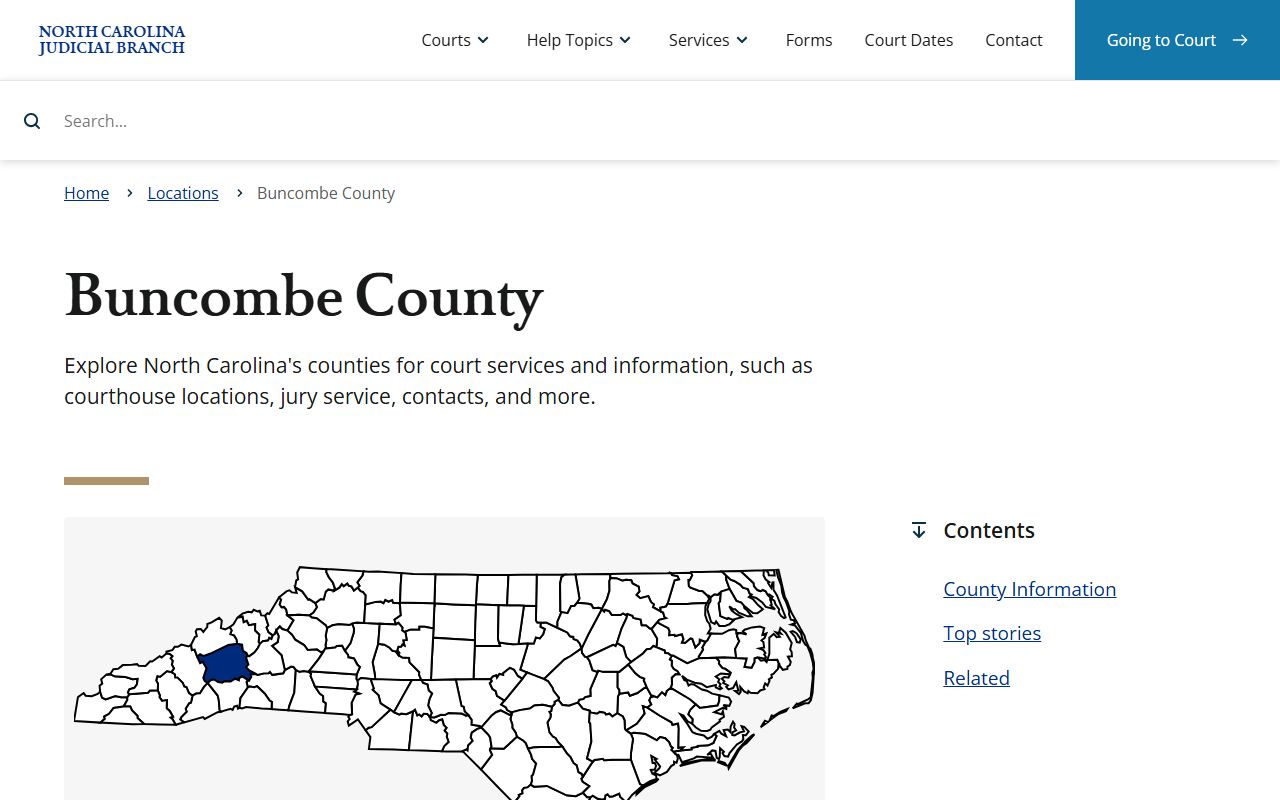
Certified copies of court documents tied to Asheville arrest records can be obtained at this location.
Asheville Records and Access Rights
N.C.G.S. 132-1.4 controls access to law enforcement records in North Carolina. Basic arrest data from Asheville is public. Names, charges, dates, and booking details are released on request. Both the Asheville Police Department and the Buncombe County Sheriff follow this law.
Limits apply to some records. Juvenile cases are sealed. Expunged records are off limits. Files tied to active investigations may be held back. If an agency refuses your request for Asheville arrest records, they must cite the statute that supports the denial. You can appeal through the courts.
Asheville's position as a tourism hub means arrest records often involve people from out of town. The record system does not distinguish between residents and visitors. All arrest records created in the city are stored the same way and carry the same access rights under North Carolina law.
Asheville Criminal Court Process
After an arrest in Asheville, the person appears before a magistrate. Bond is set. The case enters the Buncombe County court system. Misdemeanors go to district court. Felonies go to superior court. Both types of cases create records that the public can view at the courthouse.
Each arrest record connects to a court file through a case number. This number follows the case from booking to final disposition. The Buncombe County Clerk can help you track any case that started with an arrest in Asheville. Files are kept at 60 Court Plaza in the heart of downtown.
Note: Some Asheville arrest records may involve charges that were resolved through diversion programs rather than traditional court proceedings in Buncombe County.
Buncombe County Arrest Records
Asheville is the largest city in Buncombe County. The county includes Black Mountain, Weaverville, and other towns. All arrest records from these areas go through the same court. For a wider view of county records, visit the Buncombe County page.
How Asheville Arrest Records Are Created
When police in Asheville make an arrest, the process creates a series of public records. The arresting officer files a report with the details of the incident. This report includes the suspect's name, date of birth, physical description, and the charges. A booking record is then created at the county detention facility that serves Asheville. The booking record adds a mugshot, fingerprints, and bond information to the file. All of this data becomes part of the arrest record under North Carolina law.
After the initial arrest in Asheville, the case moves through the county court system. The clerk of court creates a case file that tracks every action from the first appearance to the final outcome. Motions, plea agreements, trial dates, and sentencing records are all part of this file. Under N.C.G.S. Chapter 132, most of these Asheville arrest records are open to the public. Anyone can request to view them at the clerk's office or search for basic case information through the NC Courts portal. Some records may be sealed by court order, but this is not common for standard arrest cases in Asheville.